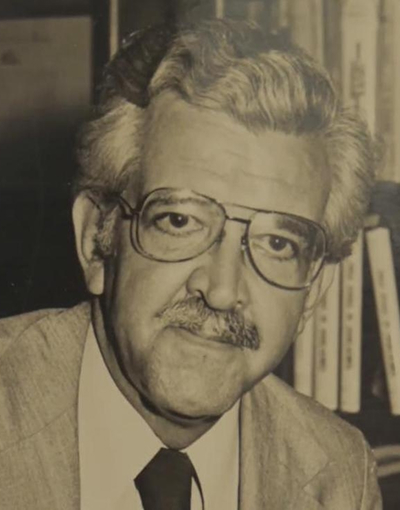
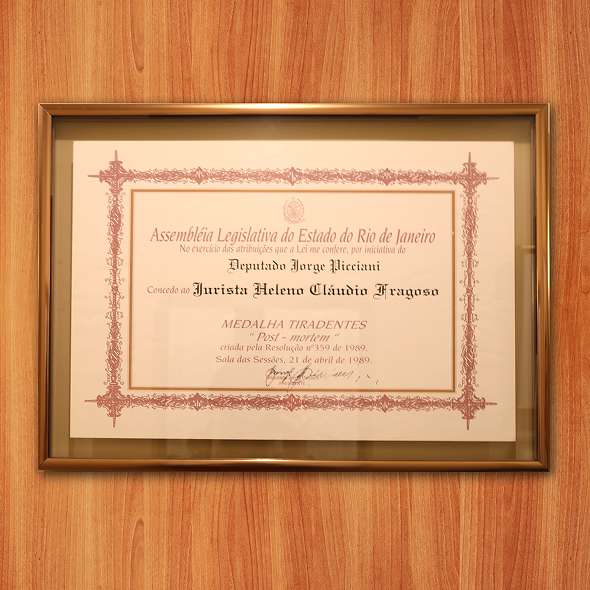
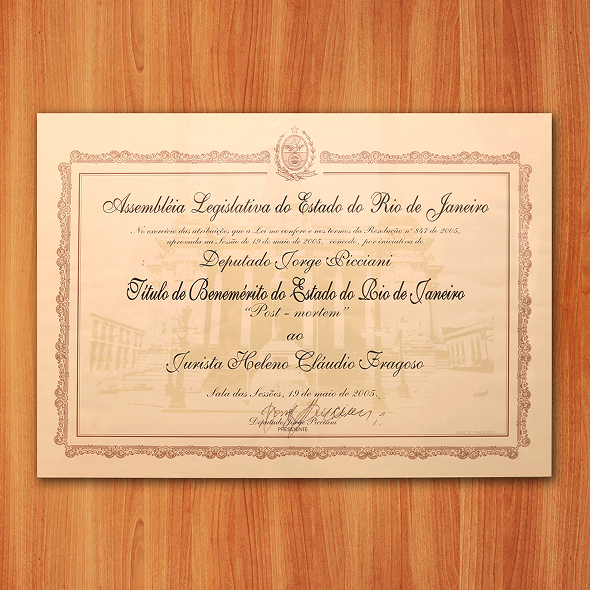
Heleno Cláudio Fragoso, who founded Fragoso Advogados in 1952, is recognized as one of the greatest jurists and criminal defense lawyers in the history of the Brazilian legal profession. He was born on February 5, 1926, the son of Luciano de Souza Fragoso and Felícia Ayres Fragoso. Following his father’s death when he was just two years old, he began working at an early age. He earned his law degree in 1951 from what is now the Rio de Janeiro State University. The following year, he established the firm, originally named ‘Escritório de Advocacia Professor Heleno Cláudio Fragoso’.
Heleno published his major work, ‘Lições do Direito Penal’ (Lessons on Criminal Law), at the age of 32. At 35, with his thesis ‘Conduta Punível’ (Punishable Conduct), he defeated an appellate judge from the Court of Justice of the Federal District in the competition for the ‘Livre-Docência’ (habilitation) in Criminal Law at the National Law School of UFRJ. He subsequently established himself in academia and began to gain wider recognition.
During the military dictatorship established after the 1964 coup, Heleno Fragoso consistently acted on behalf of those persecuted for political reasons before the Federal Military Courts and General Commissions of Inquiry. In a landmark case, he was the lawyer responsible for the collective ‘habeas corpus’ petition that secured the release of nearly a thousand young people who had gathered in Ibiúna, São Paulo, for the 1968 National Union of Students (UNE) congress.
Among other high-profile cases, the jurist also defended Niomar Moniz Sodré Bittencourt, owner of the Rio-based newspaper ‘Correio da Manhã’, which had published an editorial attacking the dictatorship, as well as writer Caio Prado Júnior, a staunch critic of the regime and owner of Editora Brasiliense; Catholic clergy members who championed human rights; and the revolutionary Stuart Angel Jones, who was murdered by the military at Galeão Air Force Base in Rio in 1971. He also distinguished himself by representing prominent clients in several sensational economic criminal law cases, such as the Coroa-Brastel, Delfin, Banco Econômico, and Banco Comind affairs.
Heleno also advocated for the family of journalist Vladimir Herzog, who was tortured and killed at the 2nd Army’s DOI-CODI facility in São Paulo in 1975. He served as an assistant to the prosecution during the second trial regarding the murder of socialite Ângela Diniz. His efforts led to the conviction of the accused, Doca Street, and the definitive refutation of the “defense of honor” argument, a tactic previously employed by defense attorneys in femicide cases. Due to his courageous human rights advocacy, he was abducted by unidentified agents in 1970 and remained missing for two days. At the time, he was the vice president of the OAB-Guanabara (the Guanabara chapter of the Brazilian Bar Association).
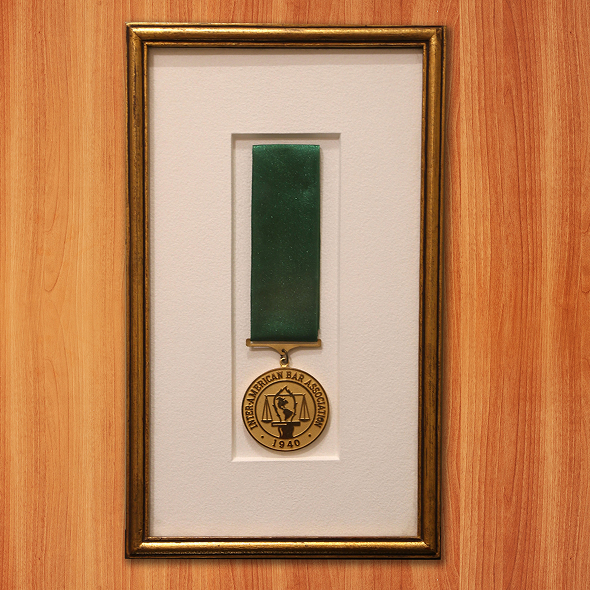
In the institutional sphere, Heleno Fragoso served as vice-president of the OAB Federal Council, a federal councilor for the organization, and vice-president of the Guanabara Section; he was also a full member of the Institute of Brazilian Lawyers (IAB) and served on its Superior Council. He was also active in various national and international organizations, notably serving as vice-president of the International Commission of Jurists in Geneva and the International Association of Penal Law in Paris.
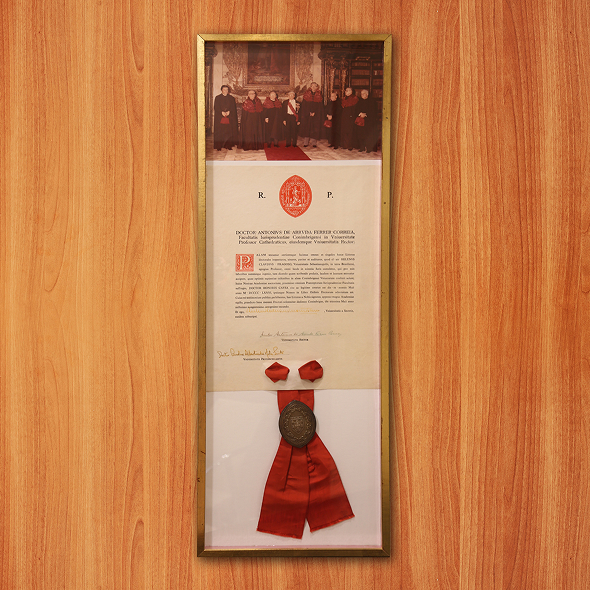
In his academic career, he distinguished himself as a full professor of Criminal Law at the Rio de Janeiro State University and Candido Mendes University, as well as holding the title of ‘livre-docente’ (habilitation) at UFRJ. He served as a visiting professor at New York University and at the John Jay College of Criminal Justice (City University of New York). He was awarded an honorary doctorate by the University of Coimbra. Throughout his career, he published 14 legal works, cementing his significance in the field of Criminal Law.
Heleno Cláudio Fragoso passed away in Rio de Janeiro in May 1985, at the age of 59. He remained an active lawyer until the very end. To this day, he is recognized as a major national figure in the defense of civil liberties and the democratic rule of law.